#neuroscience

68 posts · Last used 9d

Replying to on lemmy.world
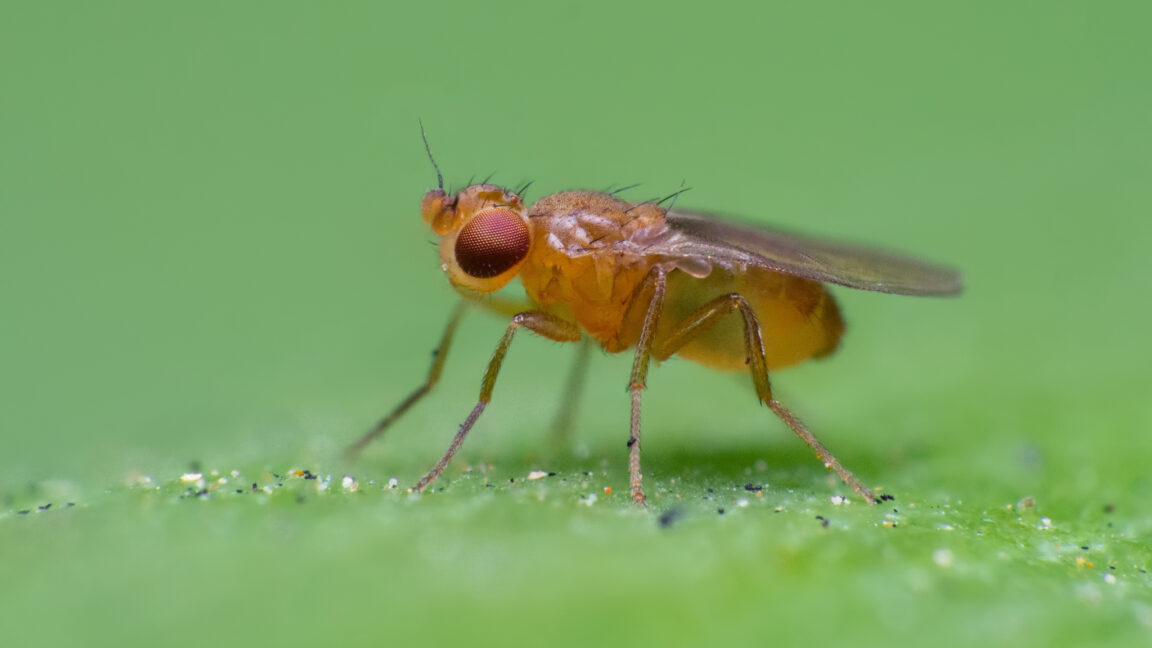
@Feathercrown@lemmy.world @artISAn@lemmy.world #consciousness #AI #brain #neuroscience #computer #functionalism Even a “complete simulation” of a fruit fly brain would be no more than an approximation. I think you mean “emulation” and I agree. The simple reason is that we do not know scientifically all of necessary and sufficient functional mechanisms of consciousness, nor consciousness’s functional role in “intelligence” (which we also have trouble describing). If, and only if we we did, we would (given the right tools) be able to replicate it functionally (in principle) using computation. Specifically, I refer to a Universal Turing Machine (UTM) and the Church-Turing Thesis (the foundational principle of all computer science). EVEN THEN, there are computational problems that cannot be proved to be solvable by a UTM (e.g., the Halting Problem) and we don’t know what, if any role they play in consciousness. Bottom line for me: we are going to need a revolution in each of the sciences of psychoneurophysics, mathematical logic, and theory of computation before we can begin to talk about replicating consciousness in a machine.

0
1
0
0
“Funes the Memorious" and Other Cases of Extraordinary Memory In Jorge Luis Borges's story of barely 12 pages, the celebrated writer plays with the infinite in a context of vast labyrinths of memory and the consequences of having an unlimited capacity to remember. https://thereader.mitpress.mit.edu/borges-memory-funes-the-memorious/ Books by Pliny, the Elder at PG: https://www.gutenberg.org/ebooks/author/50041 #books #literature #neuroscience
20
1
5
2
Hello again, fediverse! 👋 I've moved here from qoto.org, which has since changed its name and had been having a lot of problems (outages, broken media) for a while. If you followed me there, please follow this account instead! For newcomers: I'm Dimos, a neuroscientist postdoc interested in neural coding, neuronal cell types and decision-making. Looking forward to reconnecting. #introduction #neuroscience
7
0
10
0
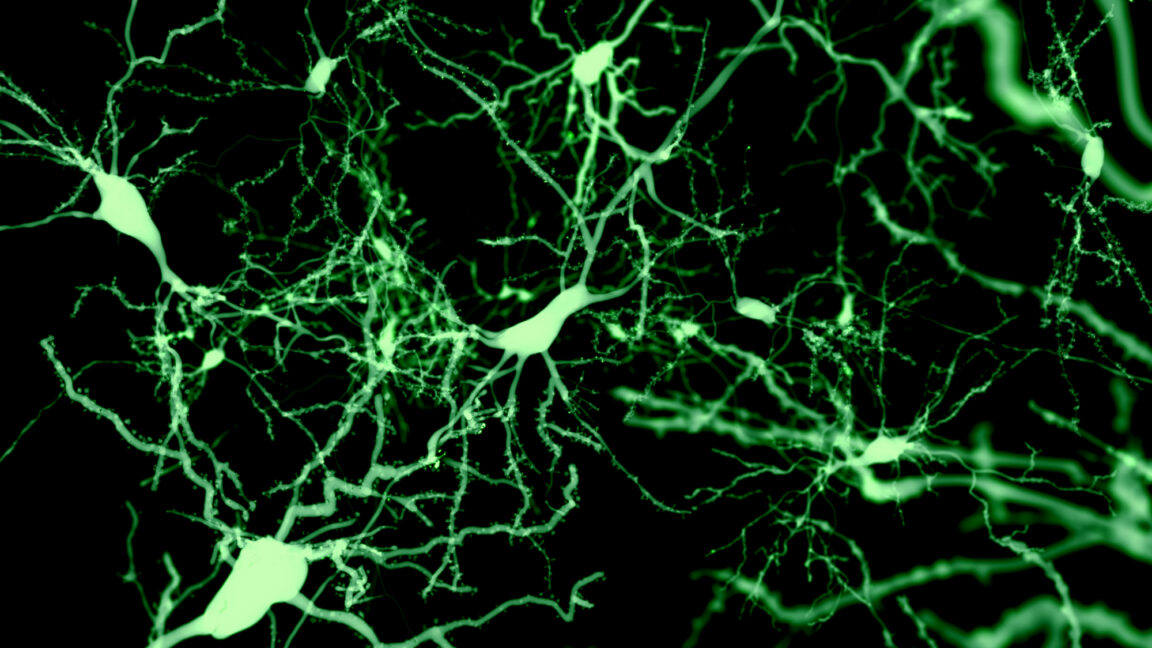
Scientists identify the rare, widely connected brain cells that appear to trigger the onset of sleep https://arstechnica.com/science/2026/09/finding-the-cells-that-put-our-brain-to-sleep/ Ars Technica reports on the identification of a population of rare neurons with unusually broad connectivity that appear to play a key role in initiating sleep - a finding that could open new avenues #science #neuroscience #sleep
2
0
0
0
Two-thirds of an octopus's neurons live in its arms — each one thinks for itself, including the reproductive one https://www.wired.com/story/octopus-arms-distributed-intelligence-nine-brains/ Two-thirds of an octopus’s neurons are in its arms—each operating independently—including the one it uses to have sex. #science #octopus #neuroscience
0
0
0
0
We're still looking for #volunteer reviewers for the Impact Scholars Program! The commitment is ~5 hrs/week, fully remote, 3-18 Sept. Open to PhD students w some review experience, postdocs, faculty, research scientists, & industry researchers. Sign up by 11 August: https://neuromatch.io/volunteer/ #OpenScience #ImpactScholars #VolunteerOpportunity #Neuroscience #DeepLearning #NeuroAI
2
0
4
0
Even if a complete neuron doesn't die, if a huge chunk of the synapses are destroyed, whatever that neuron was doing before, it's doing a fraction afterwards: a measurable, consistent, and symptom-correlated loss of dopamine nerve terminals averaging 18 percent across the long COVID group. with localized damage to areas that match Long COVID symptoms: “In other illnesses this magnitude of loss is associated with symptoms: loss in one region is associated with trouble with motivational energy problems, loss in another region is associated with some slowness of movement, and loss in a third region is associated with memory trouble.” in short, the terminals are gone, the loss is measurable, and it correlates with the symptoms patients have been reporting for years. https://tech-paper.com/scientists-finally-have-a-biological-explanation-for-why-long-covid-patients-lose-motivation-and-cant-think-clearly-they-scanned-their-brains-and-found-the-dopamine-system-was-physically-damaged/ #neuroscience #neurology #science #LongCOVID #PASC #health
58
6
77
1