#astronomy
586 posts · Last used 7d
Boosted by @welcome@friends.deko.cloud
#introduction Hi Mastodon. UAP Finder is a fixed camera that watches the night sky and records anything moving at satellite speed or faster.
Each capture is checked against satellite orbits, live aircraft, the Moon, planets and bright stars. Most are planes, satellites or clouds, and we say so. What's left is posted here with what was ruled out.
Run your own camera, free: https://uapfinder.com/setup
Questions and skeptical takes welcome.
#UAP #Astronomy #NightSky

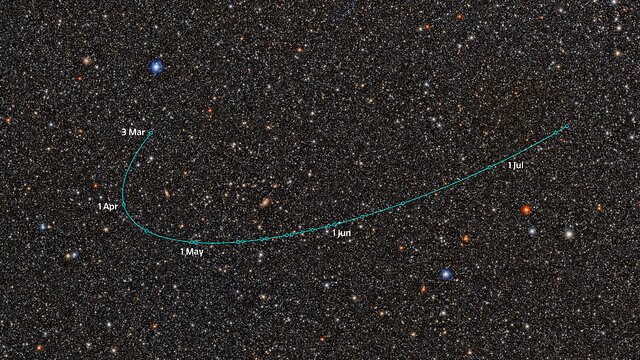
New dwarf planet just dropped.
For now, it's called 2026 ED138. It appears to be ~1000 kilometers (600 miles) wide. If confirmed, that would make it a dwarf planet about half the size of Pluto.
https://rubinobservatory.org/news/rubin-first-dwarf-planet-candidate #space #science #astronomy #nature
Replying to
Replying to
Time-lapse process for Day 9: Heavy.
I love how much our understanding (and depiction) of black holes has changed since I was a kid. Tried to capture some of that here. Some. 😅
#Inktober #Astronomy #FediArt #HumanArt #LineaSketch
Boosted by @trending@homestead.social
Just for fun: the Moon seen through thin cloud last night, a couple of hours before it was full 🌝
Capturing details on the Moon itself at the same time as the colourful surrounding halo would be extremely challenging, so this is a two image montage, with a longer exposure for the cloud & a shorter one for our satellite.
Both hand-held with my Nikon, so the cloud part is fairly noisy.
Anyway, as I say, just for fun 🤷♂️🙂
#Photography 📷
#Astronomy 🔭
#Heidelberg 🏰
Boosted by @gvenema@fairmove.net
2000 tonnes of steel sliding on a few microns of oil!
Our Extremely Large Telescope (ELT) was tilted for the first time in October 2026. To point anywhere in the southern sky the telescope needs to rotate on two different axes. A few months ago it on its vertical axis for the first time. Now, tilting on its horizontal axis is another step in the right direction.
Read more: https://www.eso.org/public/videos/potw2643a/
📹 ESO/Cimolai/Apical/G. Vecchia
#astrodon #astronomy #astrophysics #space #science #engineering
Stargazing on Boston Common, just to the north of the baseball fields, near the entrance to the underground parking garage
Saturday Oct 24, 7-9 PM
Saturn! The moon!
attn @knizer@toot.boston
#boston #astronomy
Boosted by @trending@homestead.social
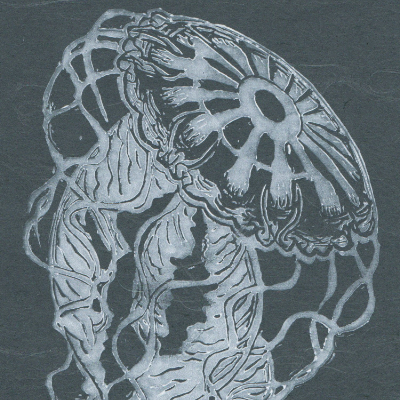
For day 23 #spacetober_challenge nebula: Caroline Herschel (1750 – 1848) a trail blazing woman in #astronomy. Hers was a real life Cinderella story, where rather than marrying a prince, she made a life & career for herself. Marriage her expected role but she was deemed unmarriageable, since a childhood bout of typhus stunted her growth. Her mother thought she should train to be a servant, & 🧵1/
https://minouette.etsy.com/listing/187140629
#linocut #printmaking #sciart #womenInSTEM #histsci
Boosted by @trending@homestead.social
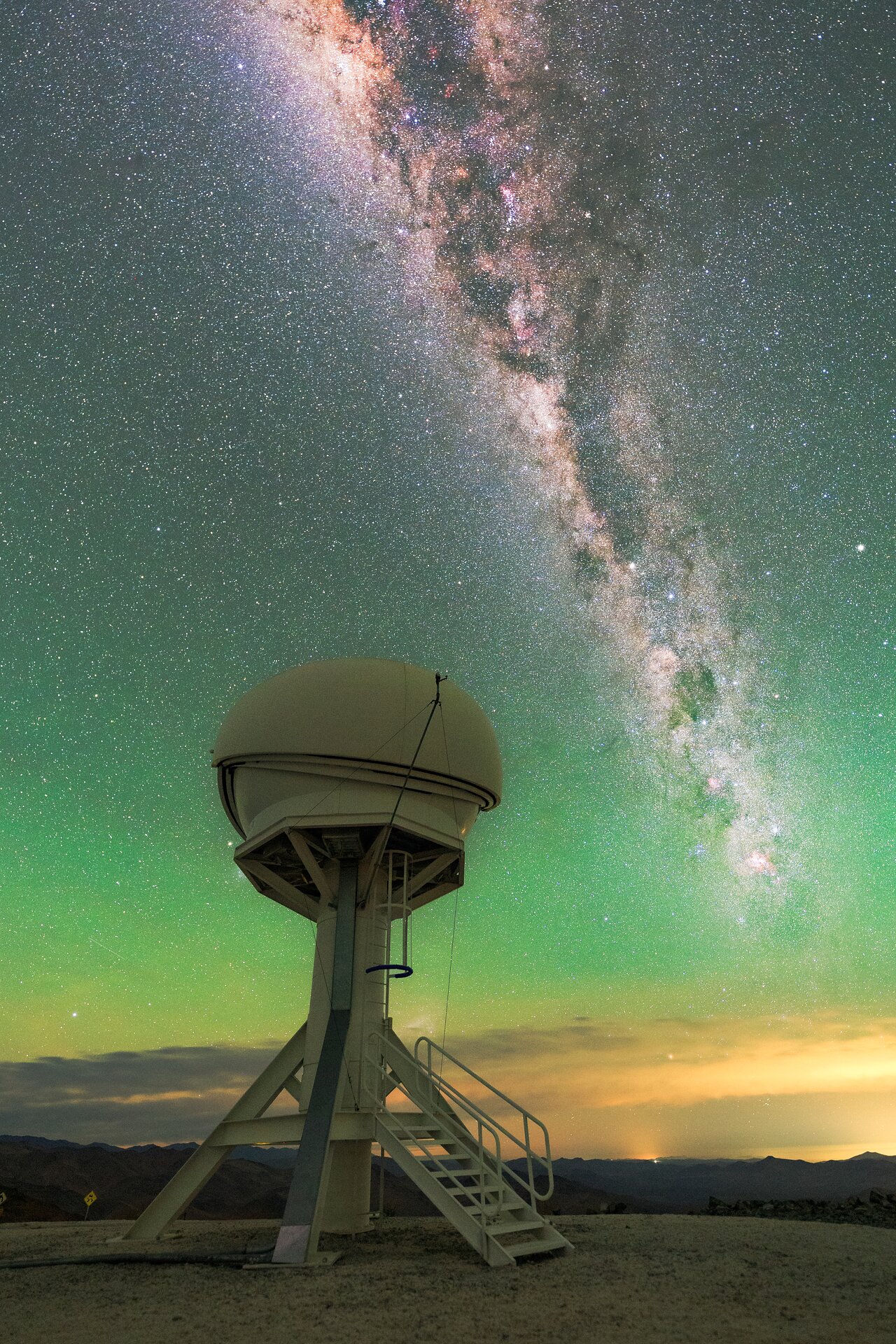
This object is one of the three BlackGEM telescopes hosted at our La Silla Observatory.
Its mission? To help detectors such as LIGO and Virgo to pinpoint powerful gravitational-wave events, like neutron star and black hole mergers, by detecting the visible afterglow that some of these events leave behind.
Learn more: https://www.eso.org/public/images/potw2642a/
📷 J. Rodrigues/ESO
#astrodon #astronomy #astrophysics #space #science #astrophotography
Boosted by @trending@homestead.social
Astronomical Clock, Messina, Sicily, Italy
“The astronomical clock of Messina is an astronomical clock in Messina, Sicily, southern Italy, constructed by the Ungerer Company of Strasbourg in 1933. It is built into the campanile of Messina Cathedral.
The mechanism was designed by Frédéric Klinghammer, with the artistic design based on plans by Théodore Ungerer. Parts of the design are similar to the Strasbourg astronomical clock. The idea was to restore the ancient astronomical clock of the old medieval bell tower of the cathedral of Messina, destroyed in previous eras. It was commissioned by the Archbishop of Messina Angelo Paino to mark the reconstruction of the campanile after the 1908 Messina earthquake, perhaps on inspiration of Pope Pius XI, who gave him a functioning model of the Strasbourg clock.[1] – Wikipedia
https://welchwrite.com/blog/2026/10/14/clock/
Follow My Photos on Pixelfed: https://pixelfed.social/p/douglaswelch/1016008152518662441
#clock #astronomy #architecture #history #messina #sicily #italy #photography #travel
Replying to
Joao Alves from Vienna, speaking as A&A editor in chief - "Writing is Thinking: If we hand the writing to a machine, we quietly hand over the thinking too."
#astronomy #academia #AcademicChatter #EAS2026
Tunnel vision!
Step inside the tunnels below our Paranal Observatory in #Chile. They connect the Unit Telescopes, which comprise the Very Large Telescope (VLT), to the control building where the VLT and its instruments are operated by observing teams.
And no worries: despite the eerie, sci-fi atmosphere, no drooling, man-eating aliens are roaming there, just astronomers and engineers 😉
Read more: https://www.eso.org/public/images/potw2624a/
📷 L. Sbordone/ESO
#astrodon #astronomy #astrophysics #space #science
Boosted by @oxy@social.bsdlab.au
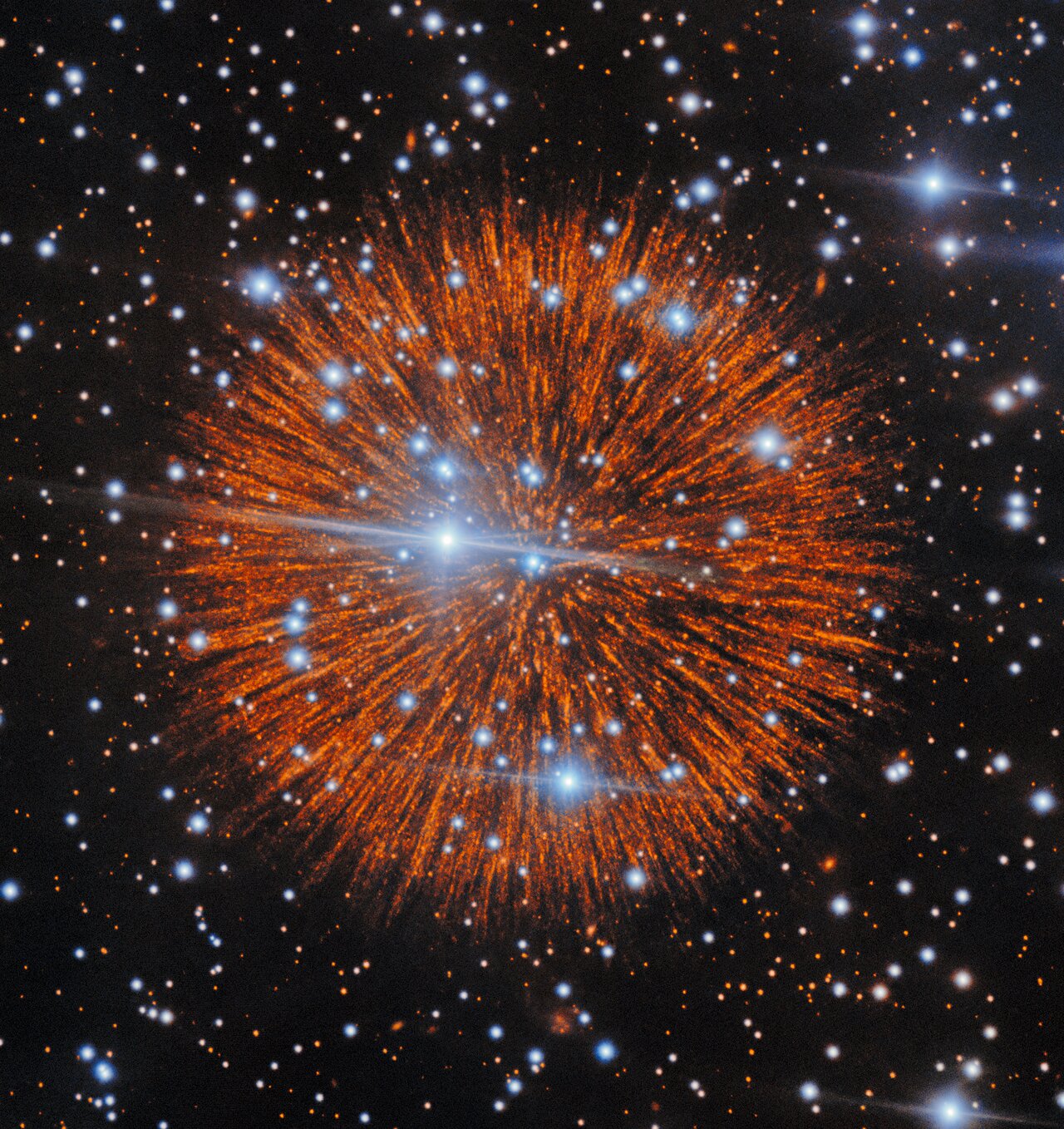
Spotted this great image, yes a real image, last night! It looks like a firework going off!
It's of the supernova remnant Pa 30 and was taken by the Gemini Observatory (north).
It's probably the only one of these I have ever seen an image of and could also be the only one we know about in the entire Galaxy.
Pa 30 (IRAS 00500+6713) has a central white dwarf star (eventually what our Sun will become).
The idea is that this supernova ejecta formed in 1181 and may have been observed / documented by Chinese and Japanese astronomers. It's thought to have formed when two white dwarfs collided.
Those long radial filaments are likely caused by Rayleigh- Taylor instabilities. The authors of the paper below suggest that these could be what's left over from a slower ejecta shell that has been shaped into these long, narrow structures by the winds of the white dwarf star.
The white dwarf itself is fascinating. Likely rapidly rotating and has a very powerful magnetic field (almost as strong as a millisecond pulsar).
Truly an odd, yet wonderful Galactic object!
Open access paper about this object: arxiv.org/abs/2301.04809
Image: https://noirlab.edu/public/images/noirlab2624a/
📸 International Gemini Observatory/NOIRLab/NSF/AURA/T. Cunningham/J. Miller & M. Rodriguez /T.A. Rector /D. de Martin & M. Zamani
#SupernovaRemnant #Pa30 #GeminiObs #Astrodon #Astronomy
🪐 From Glass Rain to Zombie Worlds
In 1995, astronomers discovered the first exoplanet orbiting a Sun-like star. Today we know of 6,000+ worlds defying imagination. Some rain molten glass sideways. Others orbit backward. Infant planets spiral through cosmic nurseries while ancient worlds circle stellar corpses.
✍️ Explore the extraordinary census: https://TPC8.short.gy/BP7mexQG
🌌 When reality exceeds science fiction.
#Exoplanets #Astronomy #Space #JWST #NASA #Astrophysics #Astrobiology #Cosmos #TPC8
Why TON 618 is The Scariest Black Hole in the Universe
1/ This is the longest exposure I've ever taken: 8 months long! It shows the Sun's path on the sky between Apr 17 - Dec 11 2018, as seen from ESO's Paranal Observatory in #Chile.
This is part of a collaboration with Diego López Calvín, an expert in solarigraphy: https://solarigrafia.com
Diego sent me some of his hand-made #pinhole cameras, which I placed all over Paranal. So what do we see here? See thread below 👇
#astrodon #astronomy #astrophotography #sun #photography
Another star party at Robbins Farm Park in Arlington this Saturday night, July 11, 2026. Come see the heavens through some telescopes- as long as the skies cooperate. Starts at dusk-ish
https://arlingtonastronomy.org/
#boston #arlington #astronomy@knizer@toot.boston
Hello, and welcome! 👋
We're the Forming Worlds Lab at the Kapteyn Astronomical Institute, University of Groningen. We study how rocky planets form and evolve, and what makes a world habitable, from early magma oceans 🌋 to the atmospheres of distant exoplanets 🪐. We model planetary interiors and atmospheres together, and we build the open-source PROTEUS framework our science runs on, in the open. 💻
Over the coming days, we'll introduce our group members one by one, and the research projects each of them leads.
After that, expect regularly:
🪐 the wonder of rocky planets and alien worlds
📄 recent papers and science results
🎤 conference updates and talks
📸 life in the Forming Worlds Lab
It's an exciting time to explore other worlds. Glad to have you here, follow along! 🌍
Web: https://formingworlds.space
Code: https://github.com/FormingWorlds
PROTEUS: https://proteus-framework.org
#Exoplanets #PlanetaryScience #Astronomy #Astrodon #OpenScience
Boosted by @trending@homestead.social
A rare cosmic tipple! 🥂😉For the first time ever, astronomers have detected a rare form of the organic alcohol #methanol in space. Intriguingly, the molecule is about 100x more abundant than current models predict - a sign there’s still a secret ingredient in cosmic chemistry we’ve yet to uncover!🔭🌟The study, led by Arnaud Belloche of the Max Planck Institute for Radio #Astronomy, is part of the ALMA COMPASS programm.