#celtic

55 posts · Last used Sep 27

#FolkloreSunday #Celtic: Hares were sent by the dwellers in the hill to warn mortals if they trespassed too closely into forbidden places, or sought to damage or destroy the old mounds. So if you happen to be in the wild places of Ireland when the moon waxes full above and see a hare looking at you steadily from the tall grass, look out! Source:

6
0
7
0

#FairyTaleTuesday #Celtic: In the episode Nuckelavee, Scotland's Scariest Demonthe makers ofStories of Scotland journey to the cold waters of the North Sea. Annie relates, howas the middle of autumn approached, and the autumnal equinox drew near, the Sea Mither (In an evil hour her powerful and black-hearted rival breaks his bonds; a terrific battle ensues, called the Gore vellye (harvest destructive work). The Sea Mither is overcome, and has to take her flight from the ocean, leaving it for a time under the dominion of the wintry-faced Teran.` Listen to https://www.storiesofscotland.com/podcast/)

2
0
3
0
Fully a week late: the latest issue of The Gods and Their Croziers is out! This is Ailbhe, a Sun God and a patron of Harmony. They're a gender-ambiguous mess of archetypes that seem to come out differently in every mythology. Their closest _singular_ parallel seems to be Vishnu, but may have once included Mars. There's every reason to think that they're esoterically the Daytime face of an evening counterpart whose nature similarly encompasses the Moon and the Evening/Morning Star: Midir/Bréanainn and Aengus/Moling. And possibly a third or even fourth pairing for the Night and the Dawn. I'm still working this out. This issue is dense, and full of comparisons across multiple mythologies. It's got Loki! It's got Paris and Hector! It's got Cúchulainn and it's got Karna and Duryodhana! It's a mess! But if you stick with it, I promise you'll be as confused and enlightened as I was. https://buttondown.com/godsandcroziers/archive/sep-12-saint-ailbhe-irish-god-of-celestial-harmonious-fire/ #Pagan #Paganism #Mythology #ComparativeMythology #Gaelic #Irish #Celtic
3
1
0
0

#FairyTaleTuesday #Celtic: James Macgrigor encountered a Kelpie disguised as a stallion. Recognizing it, he stroke its nose with his claymore, severing its magical bridle bit. The Kelpie pleaded for its return, revealing its transformational powers and ability to reveal hidden beings: “If you look through the holes in the bit, you will see all manners of fairies and witches and devils.” Macgrigor lifted the bit to his eyes and peered through, and sure enough, the world he saw was bright with colour and full of beings invisible to the human eye. He was so enamoured by the contraption that he wanted to study it in more detail. He was also not deaf to the Kelpie’s claim that without the bit, he would die, and Macgrigor saw an opportunity to free the people of the surrounding area from the Kelpie’s reign of terror. Macgrigor, captivated by the bit’s power, decided to study it further, leaving the Kelpie in a vulnerable state. Despite the Kelpie’s pleas and threats, Macgrigor cleverly kept the bit, learning about the #Otherworld. „Rarely is a Kelpie the victim of a trick, but after that day, no one went missing on the banks of Loch Ness ever again, all thanks to the cunning of James Macgrigor.“ Source:

2
0
2
0

#MythologyMonday #Celtic: There were two monsters fighting in the sea one time, the Curruid and the Coinchenn their names were, and at the last the Coinchenn made for the strand to escape, but the other followed him and killed him there. Then Bolg, son of Buan, a champion of the eastern part of the world, found the bones of the Coinchenn on the strand, and he made a spear with them. And he gave it to a great fighting man, the son of Jubar, and it went from one to another till it came to the woman-champion, Aoife. And Aoife gave it to Cuchulain, and he brought it to Ireland. And it was with it he killed his own son, and his friend Ferdiad afterwards. Source: Cuchulain of Muirthemne by Lady Gregory

2
0
3
0

Nua-#CelticSoulJourney in #Ireland: While hunting, the Boar of Ben Bulben mortally wounded #Diarmaid. #Fionn would have had the ability to save his former captain and friend, but hesitated until Diarmaid was dead. Source: Dru Magus „#Myths and #legends of the #Celtic race“ #discoverireland #failteireland #ireland_gram #thisisireland #insta_ireland #wanderireland #roadtripireland #discoverireland #tourismireland #irelandphotography #beautifulireland #Celtic

4
0
3
0
Replying to

Nua-#CelticSoulJourney in #Ireland: When Becfhola attempted an assignation to the hero Crimthann, the queen of Tara instead met Flann ua Fedach and spent an enchanted night with him on an island in Lough Erne. When she returned to Tara, it was as if no time had passed, for she was living in the #Otherworld in #fairy time with Flann, who soon came to take her away. Source: P. Monaghan Encyclopedia of #Celtic #Mythology and #Folklore` #discoverireland #failteireland #ireland_gram #thisisireland #insta_ireland #wanderireland #roadtripireland #discoverireland #tourismireland #irelandphotography #beautifulireland #Celtic

3
2
2
0
Fosgail an geata. Fàg fosgailte e. Open the gate. Leave it open. That's the whole instruction. It has one moving part. You either move it or you don't, and everything else I wrote this morning is me trying to say that in Gaelic and failing at a decent length. What's the smallest gate you could unbolt today? #Gàidhlig #MastoDaoine #ScottishGaelic #Gaelic #Language #Folklore #Druid #Celtic #Blessing #Community #Solidarity #QueerNews 1/2
0
1
0
0
Replying to
What's the smallest gate you could unbolt today? #Gàidhlig #MastoDaoine #ScottishGaelic #Gaelic #Language #Folklore #Druid #Celtic #Blessing #Community #Solidarity #QueerNews Written this morning, free every morning → https://twp.ai/4huRbO 2/2
2
0
1
0

#MythologyMonday #Celtic: In no wise could the sons of Turenn direct their magic boat to the Isle of Finchory, and a quarter of a year they traversed the seaways and never could get tidings of that island. At last Brian fashioned for himself by magic art a water-dress, with a helmet of crystal, and into the depths of the sea he plunged. Source: Project Gutenberg eBook of „The High Deeds of Finn, And Other Bardic Romances of Ancient Ireland“ by T. W. Rolleston

5
0
5
0
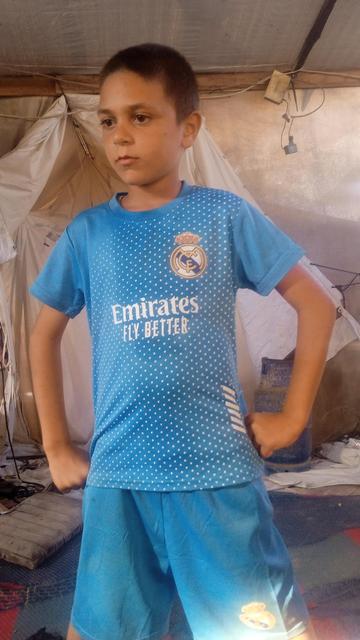
RE: https://mastodon.social/@AsarSameer/117015123440864063 'mon the #mastoFC! let's make quasi's #football wishes come true! i'd send him a #celtic top if i could. happy day, qusai!
Quoting
Today is my son Qusai’s 10th birthday 🎂 3 of those years he spent in a tent, between fear and bombing and displacement Qusai loves football so much. His only wish "Mama, I want a football to play with the kids It costs only $50. If anyone would like to make Qusai happy today and donate,🙏🏻 https://chuffed.org/project/131514-help-asar-and-her-family-survive-the-genocide#Gaza #BirthdayWish #HelpGaza #MutualAid
Open quoted post
1
0
1
0

#FindsFriday #Celtic: The throwing stick or ‘boomerang’ from Urville-Nacqueville (https://charabanctour.wordpress.com/2022/04/03/le-boomerang-de-normandie/) was found in situ in a vertical position against the wall of the ditch. Preserved from degradation by soil moisture since it was buried during the Second Iron Age (La Tène D1b: 120–80 BC), the stick was unearthed from a ditch into which it appears to have been deliberately placed as part of a ritual act. Beyond taphonomic evidence (relating to the various processes that have taken place since it was buried), this impression is reinforced by the deposition nearby, and under similar conditions, of a chimera combining, in an anatomically incorrect manner, the pelvis of an equid with a dog’s skull, and associated with several pieces of whale rib. A throwing stick – of which the boomerang is the most famous example – is a universal and timeless weapon. In an article from 1843, Samuel Ferguson was one of the first to recognise the existence of the boomerang in ancient Europe. Drawing on the writings of ancient authors, he proposed restoring its Latin name, ‘cateia’, which was subsequently explained by Salomon Reinach and later adopted by the Gaffiot Latin-French dictionary to mean a ‘throwing weapon of the Gauls which, like the boomerang [sic], returns to its point of origin’. Whilst the general context of the site does not suggest any military activity, this weapon does, however, find its place within a settlement where hunting was facilitated by the presence of various mammals (deer, roe deer, wild boar) and waterbirds (great and little auks, herring gulls, northern gannets, etc.). Through the social values it embodies, the Urville throwing stick also fits perfectly into the material culture of the site. As a hunting weapon intended for a leisure activity reserved for a privileged population free from productive labour, this object, like many others discovered at the site, outlines the contours of a prosperous civilian population whose status remains difficult to assess in detail. Source: https://www.inrap.fr/breves-gauloises-le-boomerang-d-urville-naccqueville-manche-20828

6
0
5
0
#FolkloreThursday #Celtic: `When St. Patrick introduced Christianity to Ireland, some of the old magical rituals of the past were abandoned. This angered the Tuatha Dé Danann, who were masters of magic. In protest, they used their magic powers to turn themselves into horses and galloped to Kilcornan, where they hid for centuries in the Kilcornan caves. Time passed, until one day seven foals emerged from the caves. They were frightened by the bright daylight and bolted, galloping along the edge of the cliff. The spot where they met their awful fate is now known as Aillenasharragh, or 'Leap of the Foals'. Source: Leap of the Foals at Cliffs of Moher visitor centre
1
0
2
0

#FolkloreThursday #Celtic: Tadg and his men set out over the stormy, heavy flood, till at last they saw no land before them or behind them, but only the hillsides of the great sea. And farther on again they heard the singing of a great flock of unknown birds; and pleasant white-bellied salmon were leaping about the curragh on every side, and seals, very big and dark, were coming after them, breaking through the shining wash of the oars; and great whales after them again, so that the young men liked to be looking at them, for they were not used to see the like before. Source: Gods and Fighting Men by Lady Gregory - Project Gutenberg eBook

1
0
2
0
#FolkloreThursday #Celtic: `They went all through the island, but they found no living thing on it, man or beast, but only flocks of sheep. And the size of the sheep was past all telling, as big as horses they were, and the whole island was filled with their wool. And there was one great flock beyond all the others, all of very big rams, and one of them was biggest of all, nine horns he had, and he charged on Tadg's chief men, attacking them and butting at them. There was vexation on them then, and they attacked him again, and there was a struggle between them. And at the first the ram broke through five of their shields. But Tadg took his spear that there was no escape from, and made a lucky cast at the ram and killed him. And they brought the ram to the curragh and made it ready for the young men to eat, and they stopped three nights on the island, and every night it was a sheep they had for their food. And they gathered a good share of the wool and put it in the curragh because of the wonder and the beauty of it. And they found the bones of very big men on the island, but whether they died of sickness or were killed by the rams they did not know. Source: Gods and Fighting Men by Lady Gregory
4
0
3
0
#WyrdWednesday: While horned helmets among the #Celtic tribes are well documented in artwork and coins from the period, actual archaeological confirmation of the existence of this particular type of helmet has been rare. Indeed, until now it was thought that the only known example from Iron Age Europe was the Waterloo Helmet found in the River Thames in London, which is ceremonial in nature and differs greatly from Celtic horned helmets depicted elsewhere.` Photo: Warrior with horned helmet depicted on a stele from Bormio (Lombardy), Italy, (early 4th c. BC) Source:
4
0
3
0

#FairyTaleTuesday #Celtic: In his poem “I and Pangur Ban“ the author is talking about his pet cat, Pangur Bán, bán meaning ‘white’ in Irish. Pangur means ‘fuller’, a tradesman involved in the production of woollen cloth, in which it is cleansed of oils, dirt and impurities, making it thicker. Perhaps this was a reference to the cat’s thick, white, clean fur. The author is comparing Pangur’s skill at hunting mice with his own industriousness as a wordsmith. It is quite clear from the poem that Pangur is his pet, and that there is fondness and companionship between them. Source: https://aliisaac.substack.com/ https://twitter.com/BrentMerrill/status/1754138062756422079

2
0
3
0